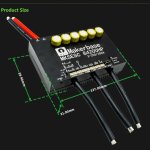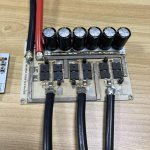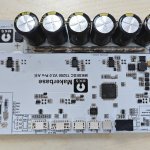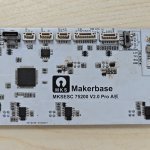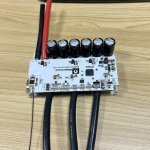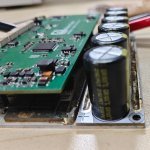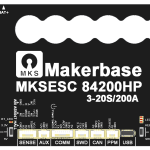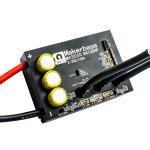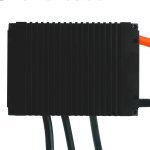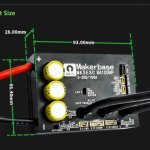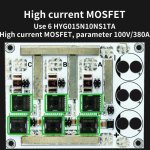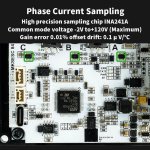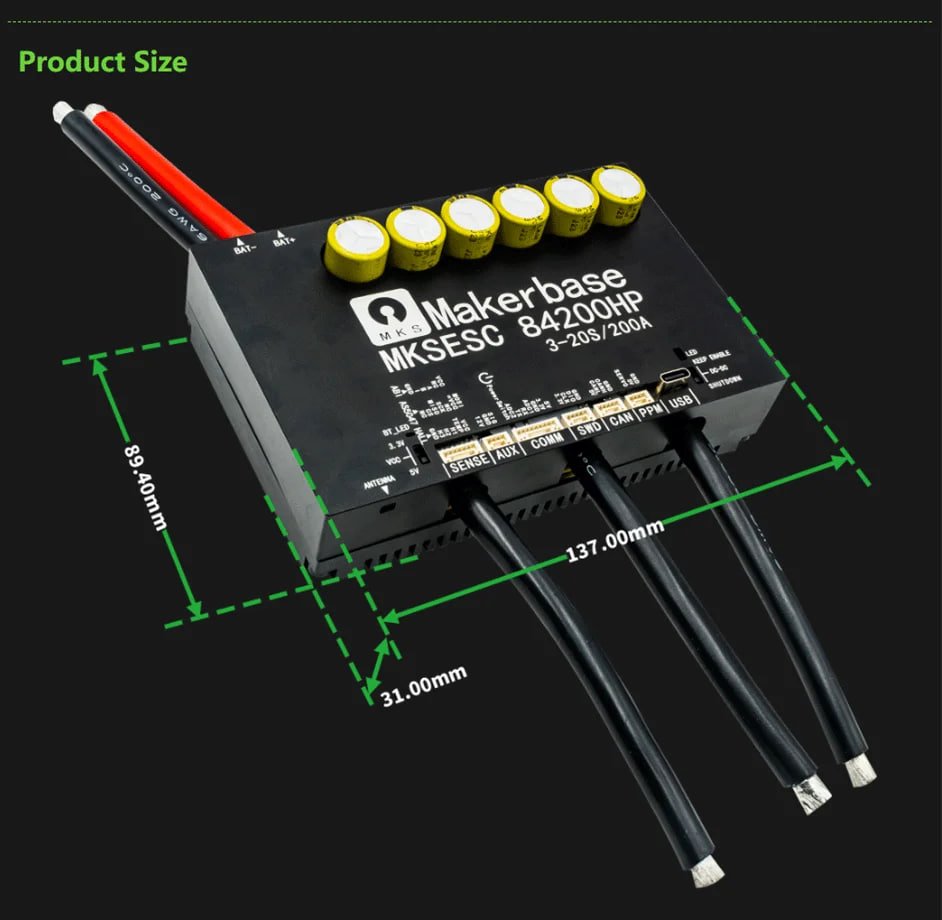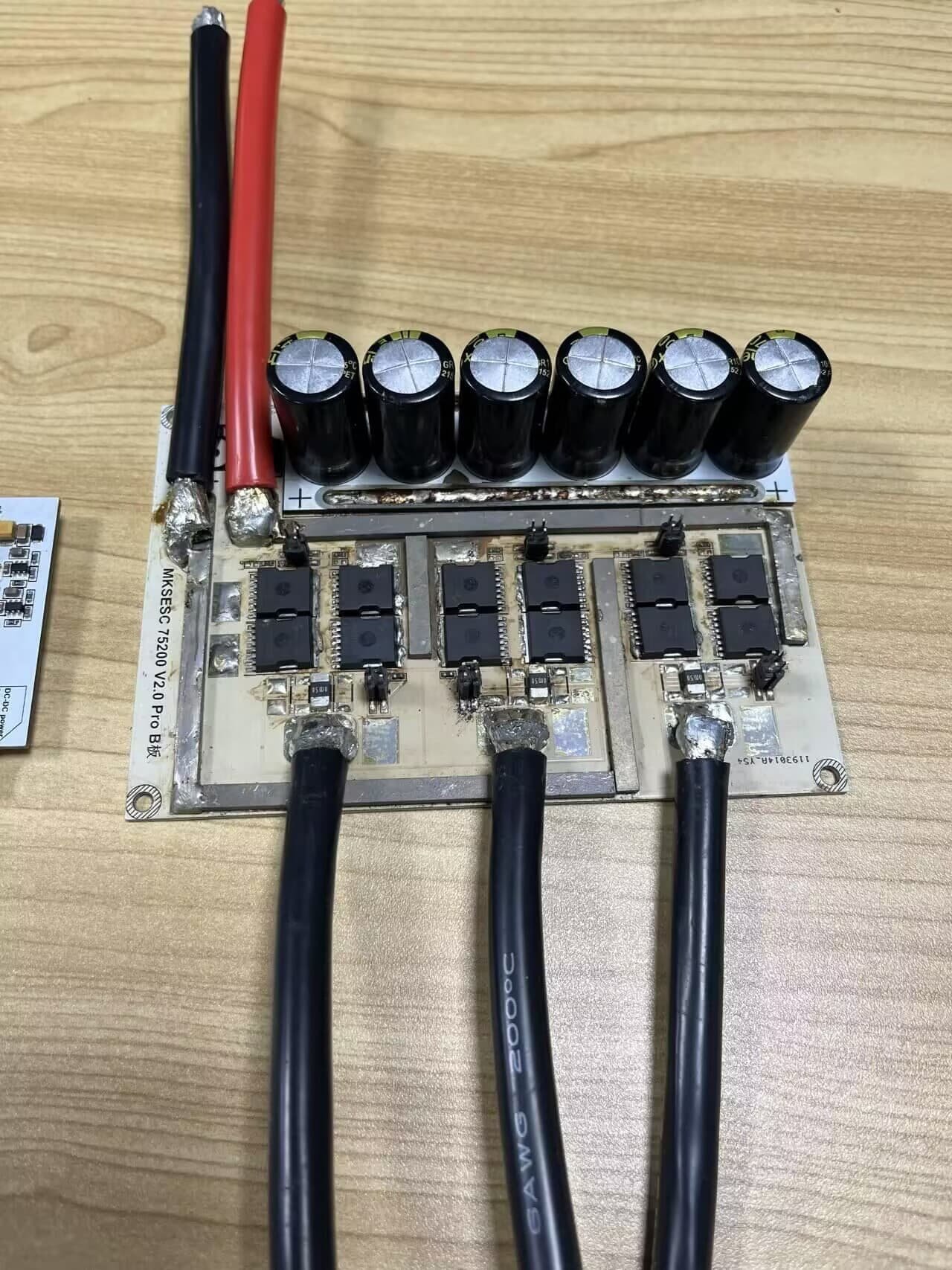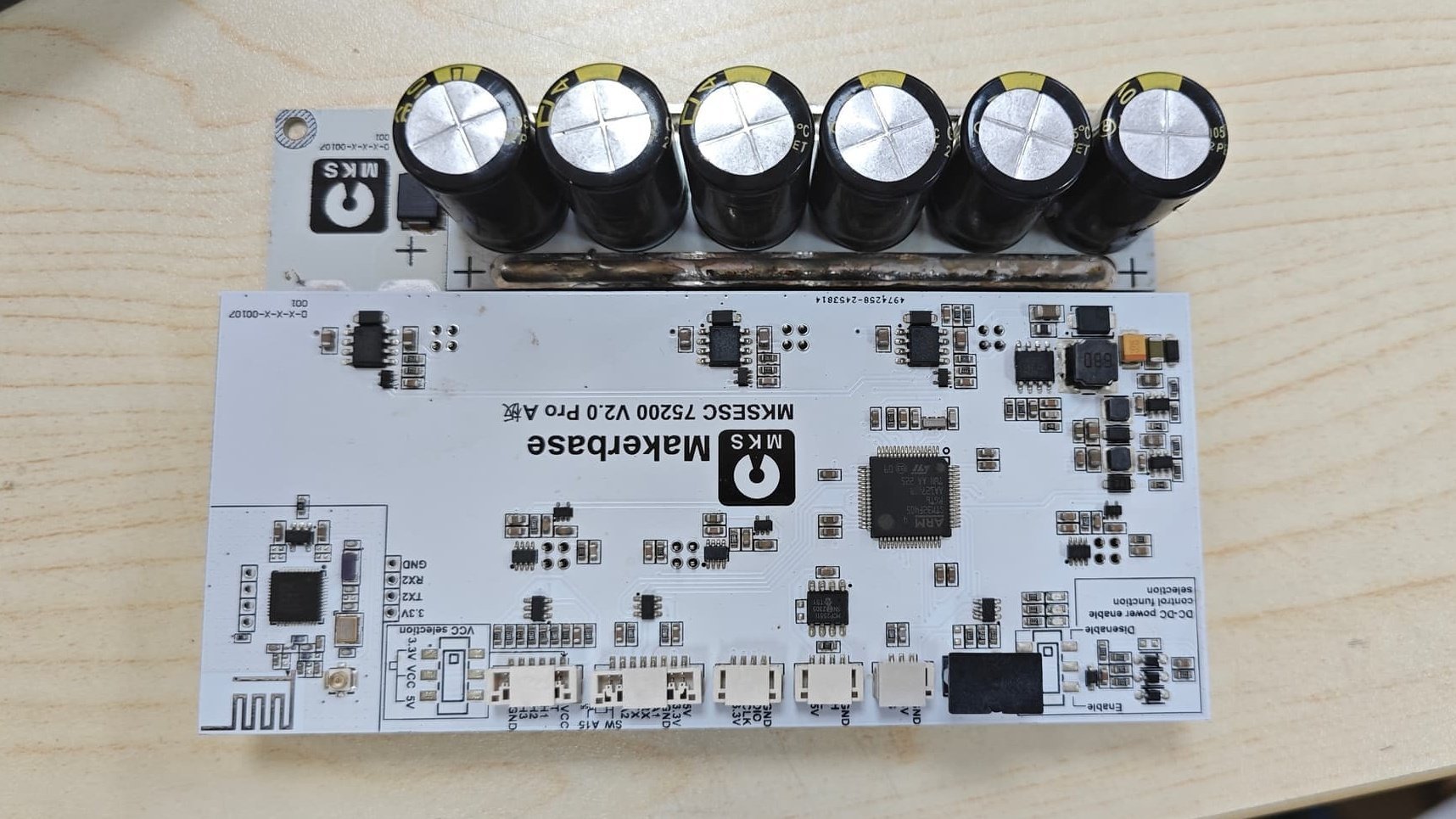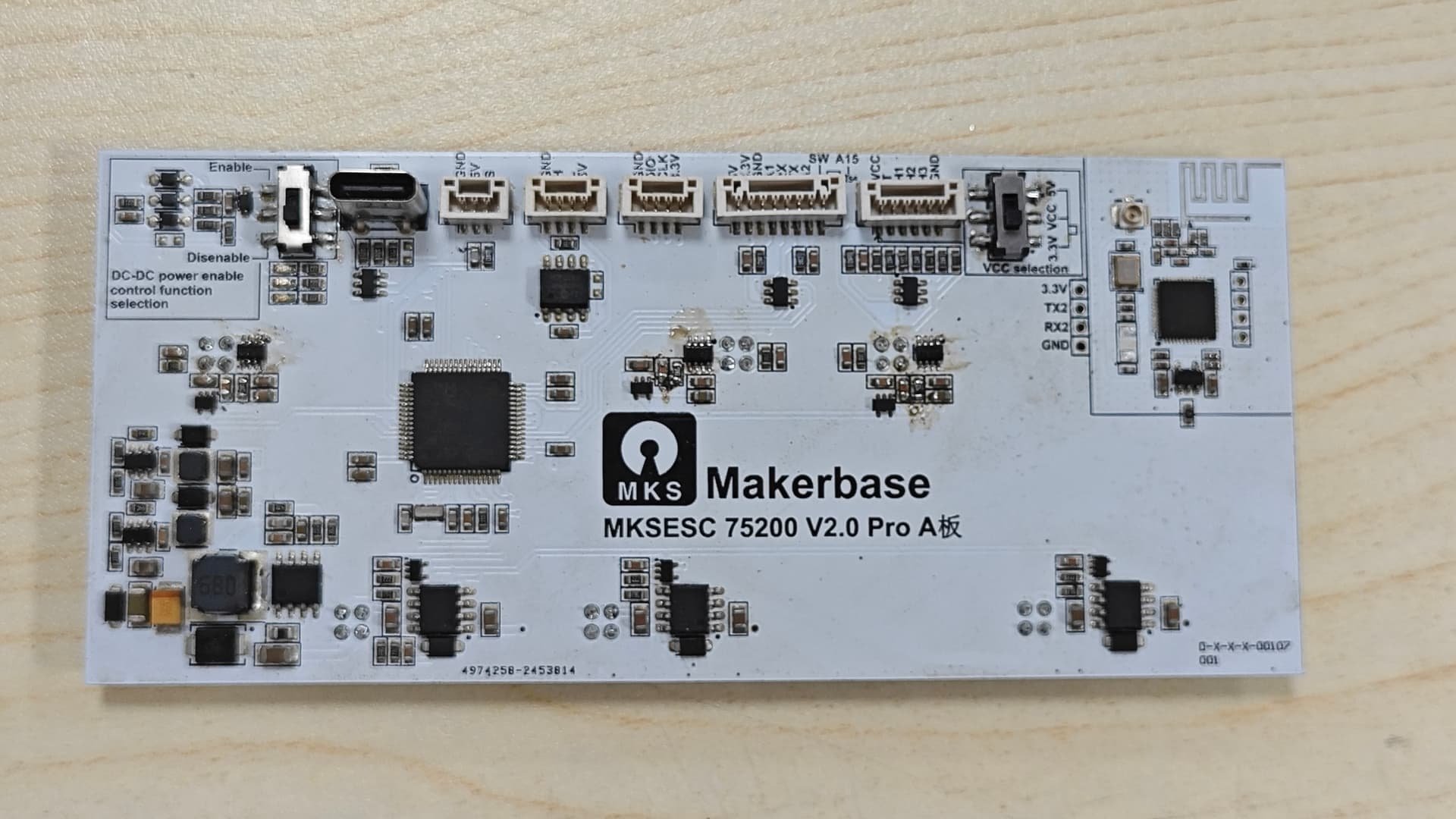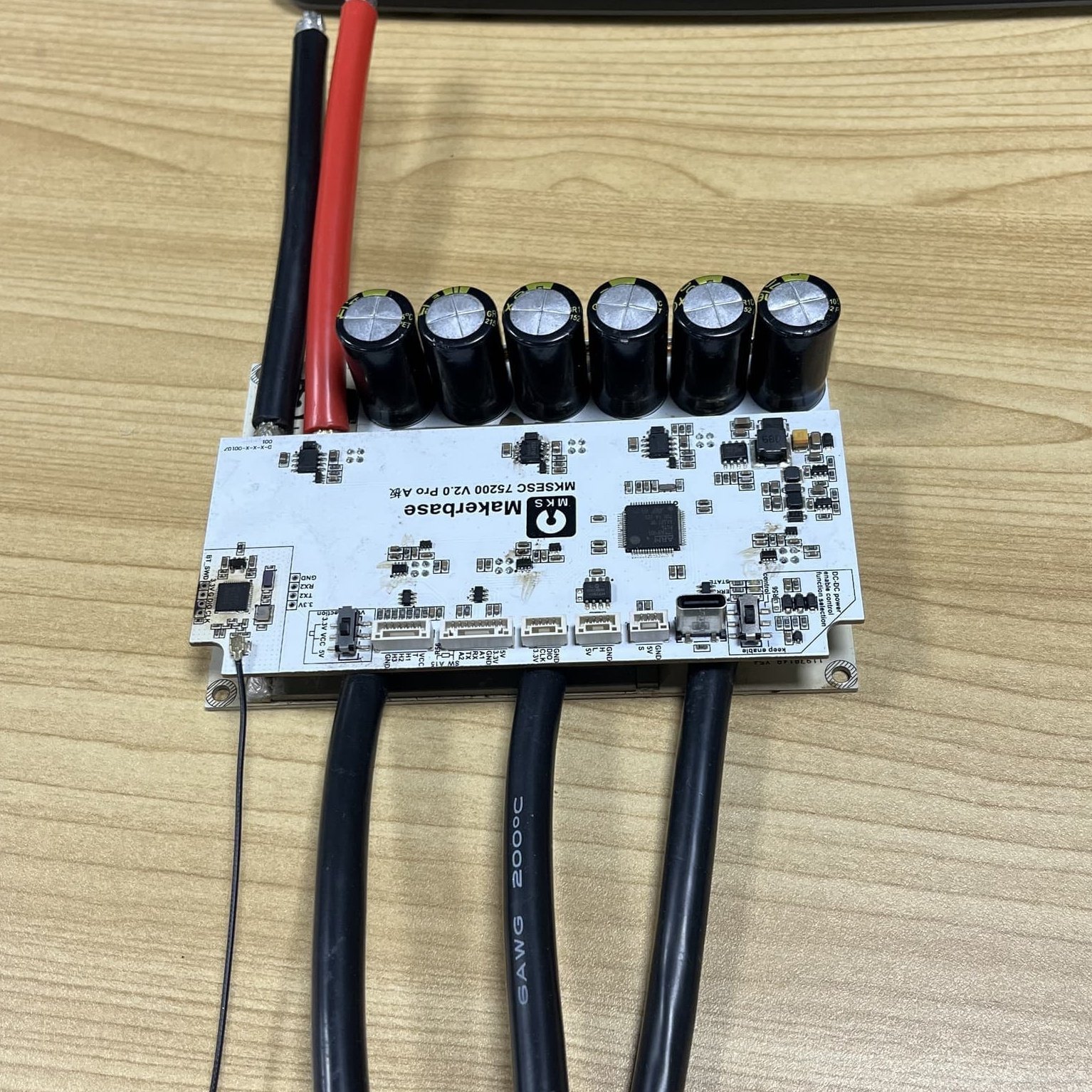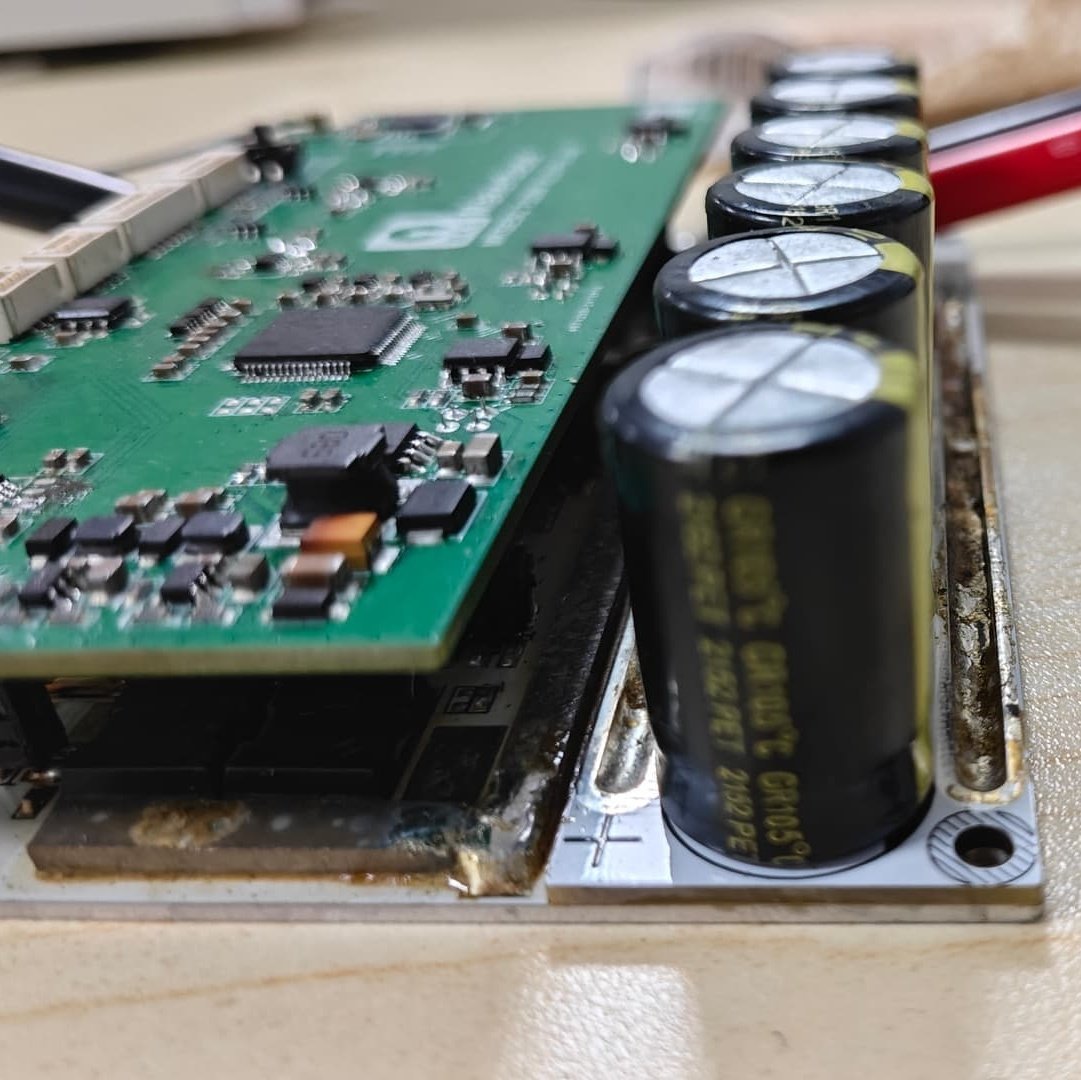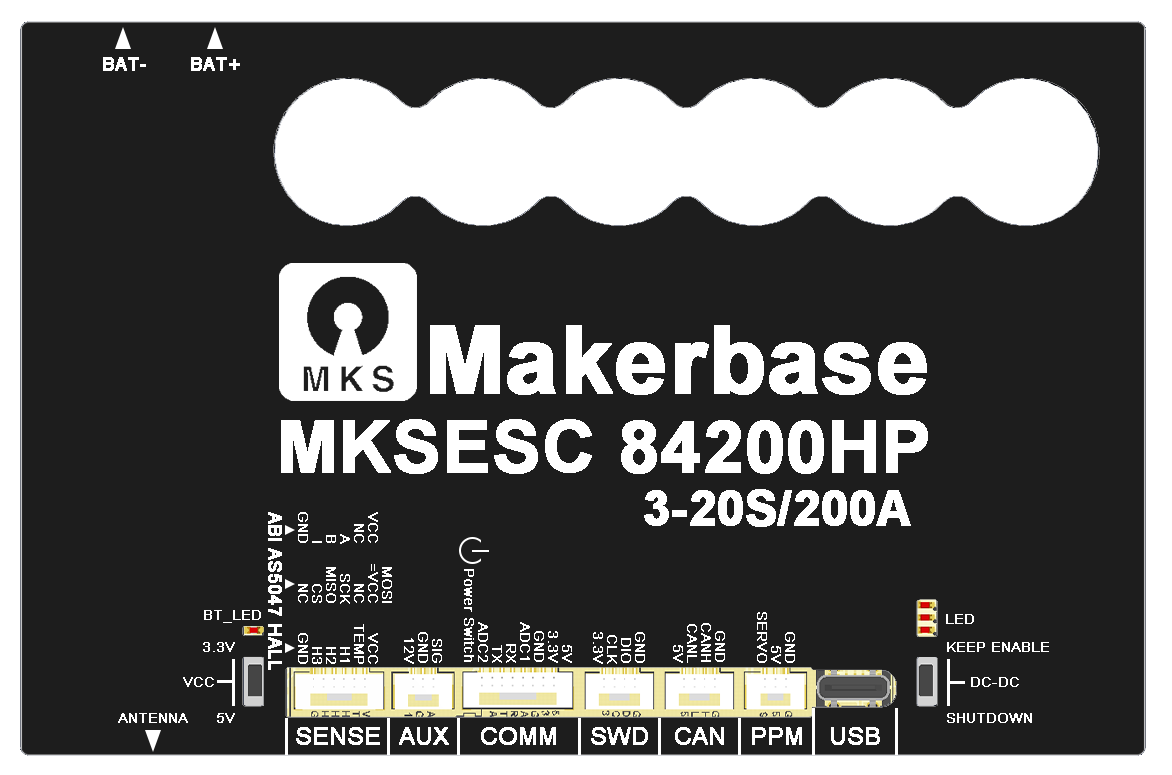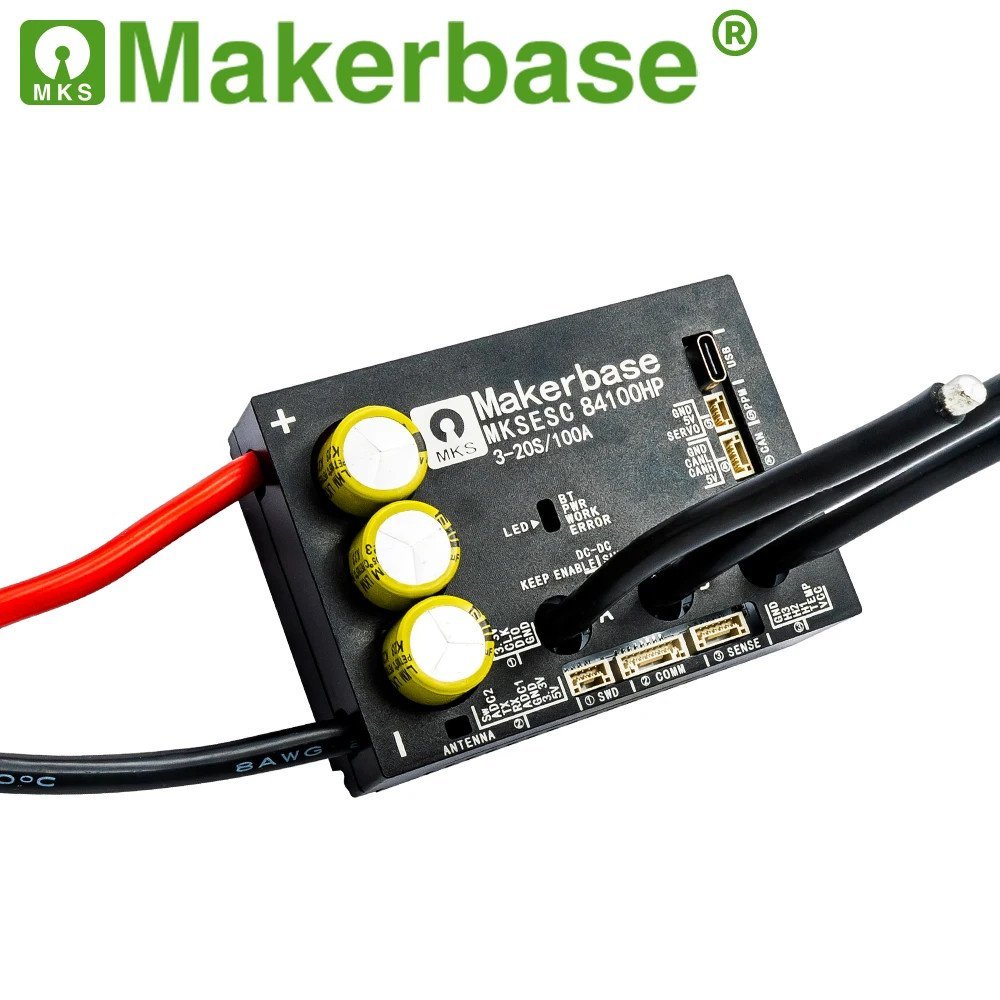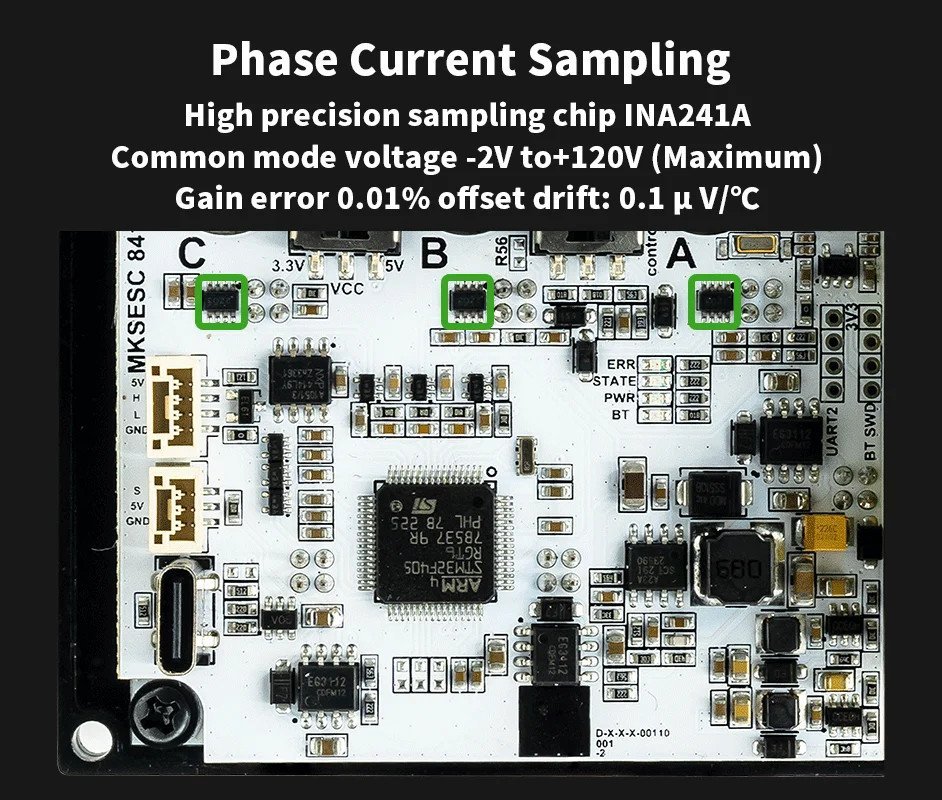

VESC (Vedder Electronic Speed Controller) controller uses the Field Oriented Control (FOC) algorithm to control the motor phase voltages. In FOC mode, the VESC controller adjusts the motor phase currents so as to create a magnetic field oriented in the direction of rotor rotation.
To control the phase voltage in FOC mode, the VESC controller performs the following steps:
1. Feedback: The controller receives feedback from sensors such as Hall sensors or encoders. These sensors provide information about the speed and position of the rotor.
2. Current control: VESC controller regulates the phase currents (Id and Iq) using Park coordinate transformation and PI controller. The Park transform converts the three phase current into two components: current along the poles (Iq) and current along the rotor (Id).
3. Voltage generation: The controller generates the appropriate phase voltages (Ua, Ub, Uc) based on the required phase currents and rotor position. The voltage on each phase is calculated and applied to generate the desired magnetic field in the motor.
4. Speed control: VESC controller also adjusts the voltage across the phases to control the speed of the motor. It analyzes the speed error between the desired speed and the actual speed, and adjusts the values of phase currents and voltages to achieve the desired speed.
As a result, the VESC controller in FOC mode controls the voltage across the phases of the motor, adjusting the phase currents and creating an optimal magnetic field to achieve the desired speed and control the motor.
The VESC controller in FOC mode controls the voltage across the phases of the motor, adjusting the phase currents and creating an optimal magnetic field to achieve the desired speed and control the motor.